symboolean.com
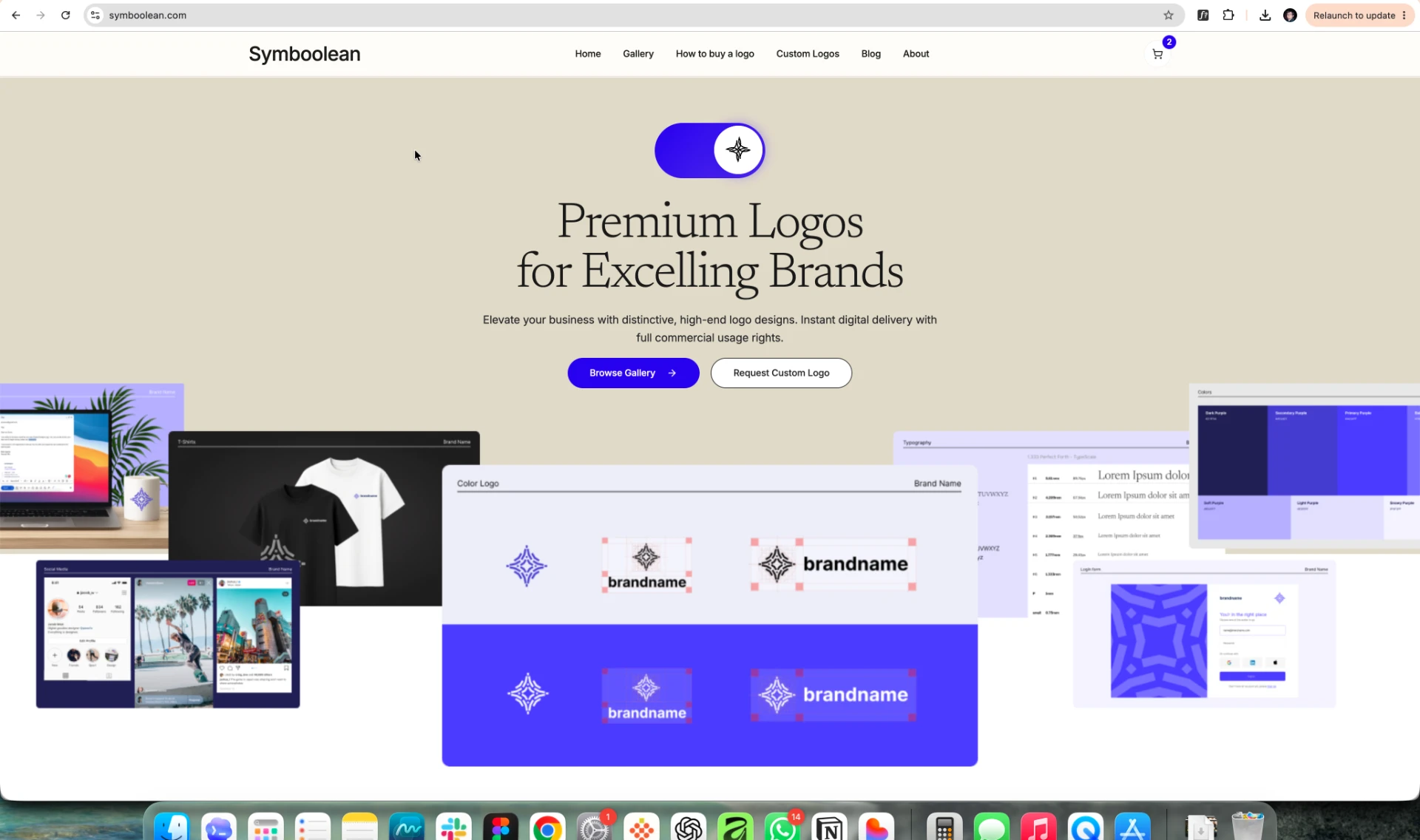
Building a premium logo marketplace for the next generation of Ai technology companies.
- Role
- Founder · Brand Strategy · Visual Identity · Product Design · UX · AI-assisted Development
- Timeline
- 2025 — present · Live
- Links
- Open live product
Overview
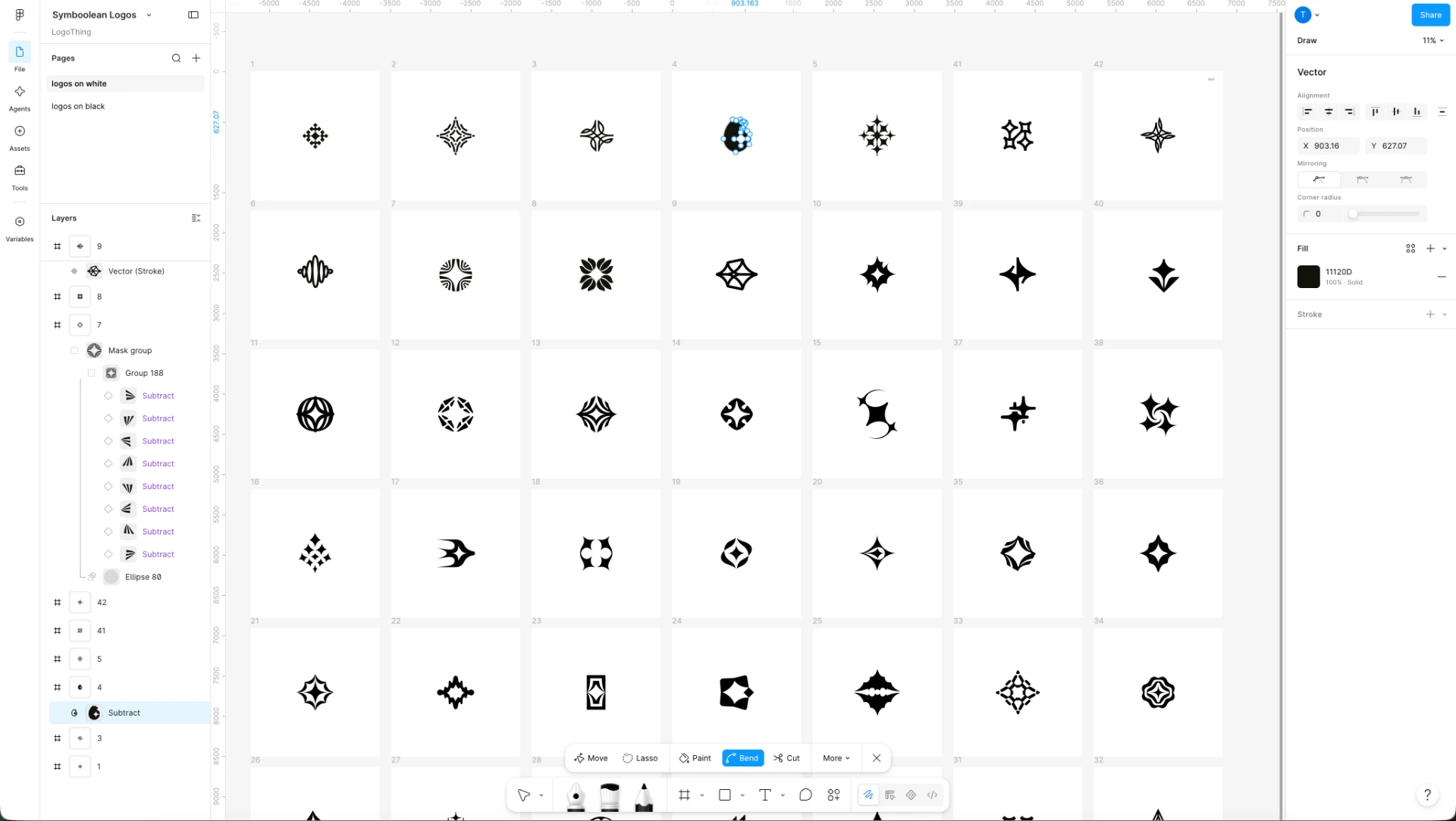
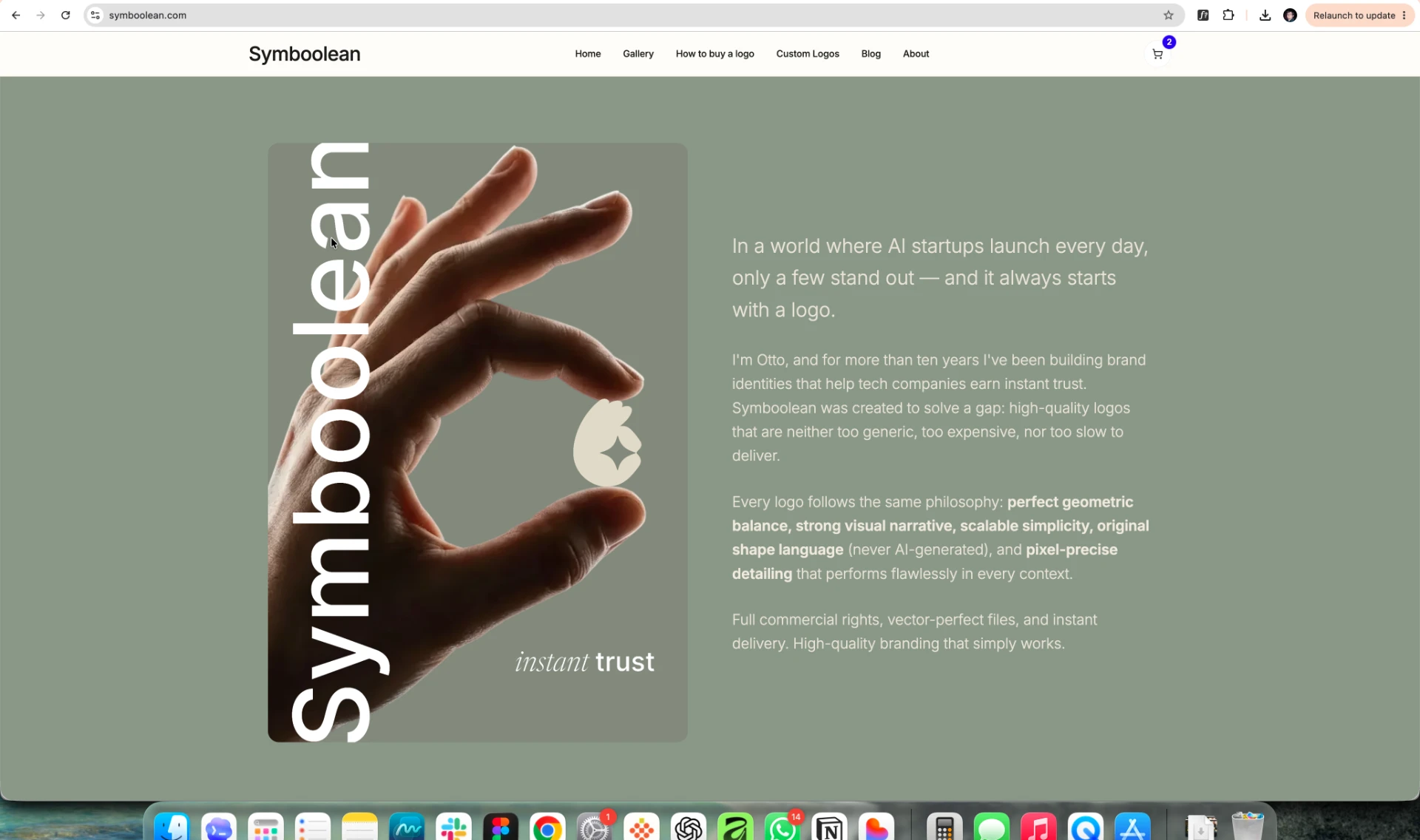
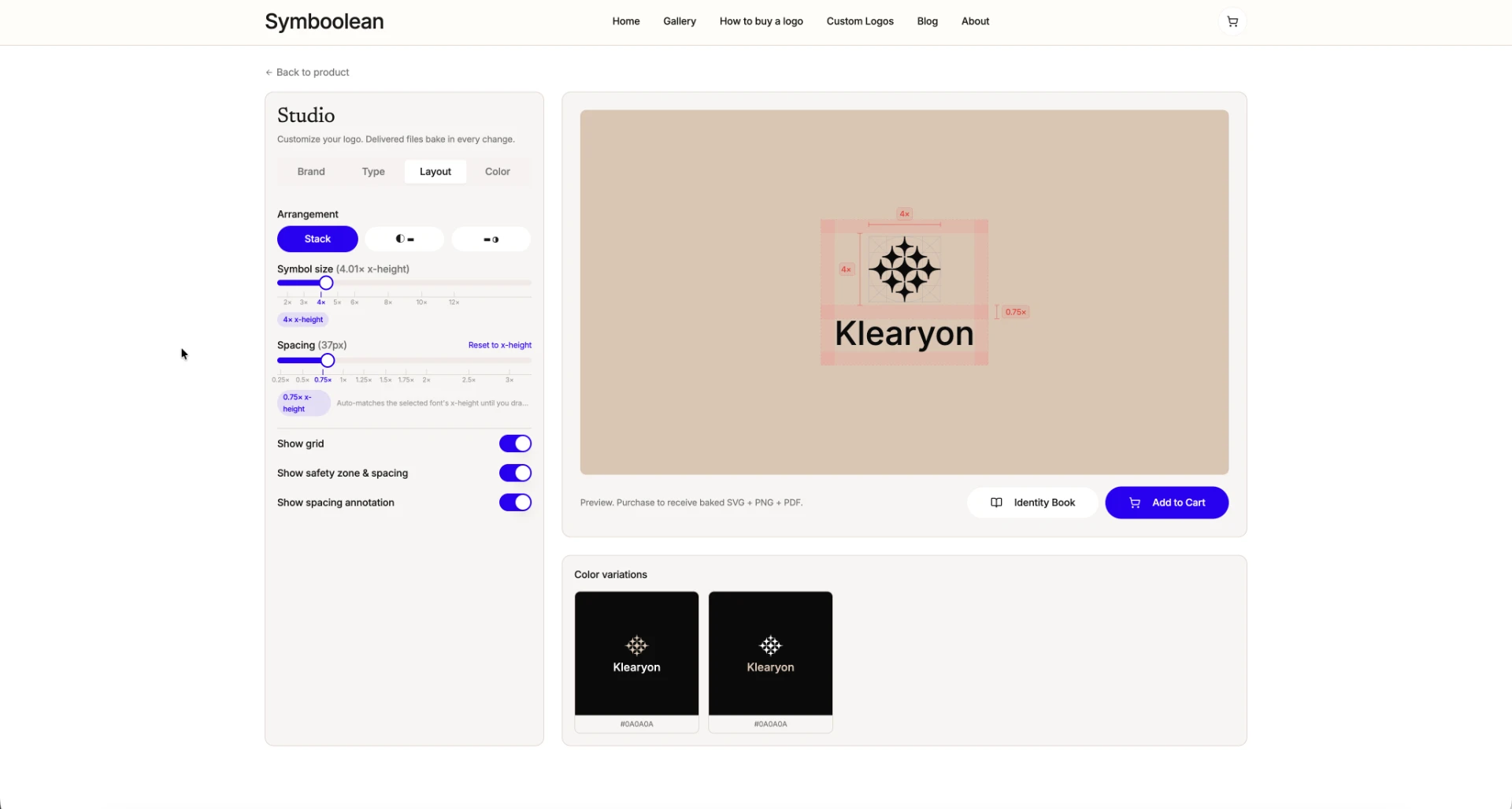
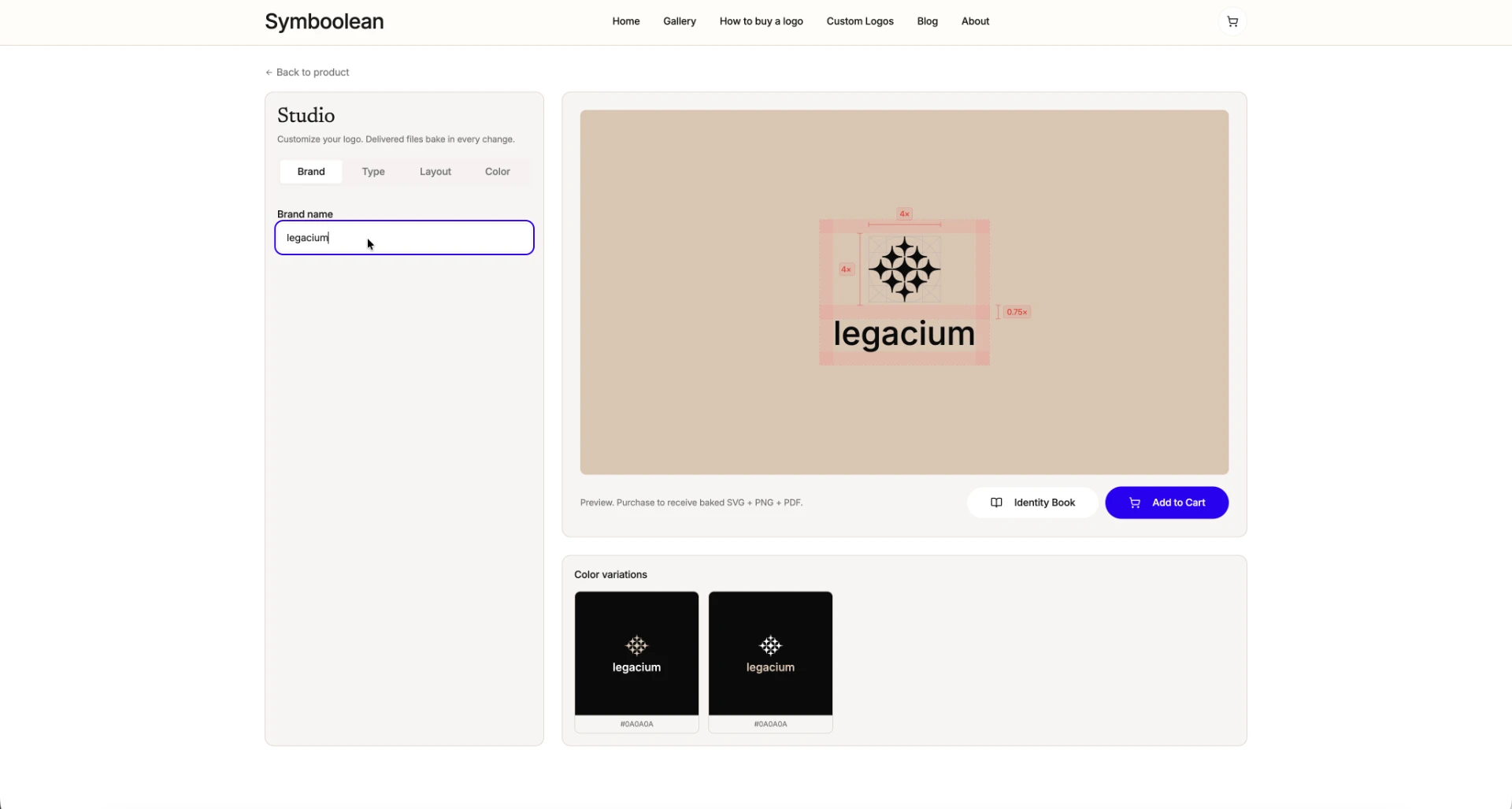
Symboolean is a curated marketplace of premium, ready-made logos designed for ambitious startups and growing technology companies. As AI dramatically lowers the barrier to building products, launching a company has become easier than ever — standing out has become much harder. Symboolean was created around a simple belief: the first impression of a company often begins with its logo.
- 100%Hand-designed, never AI-generated
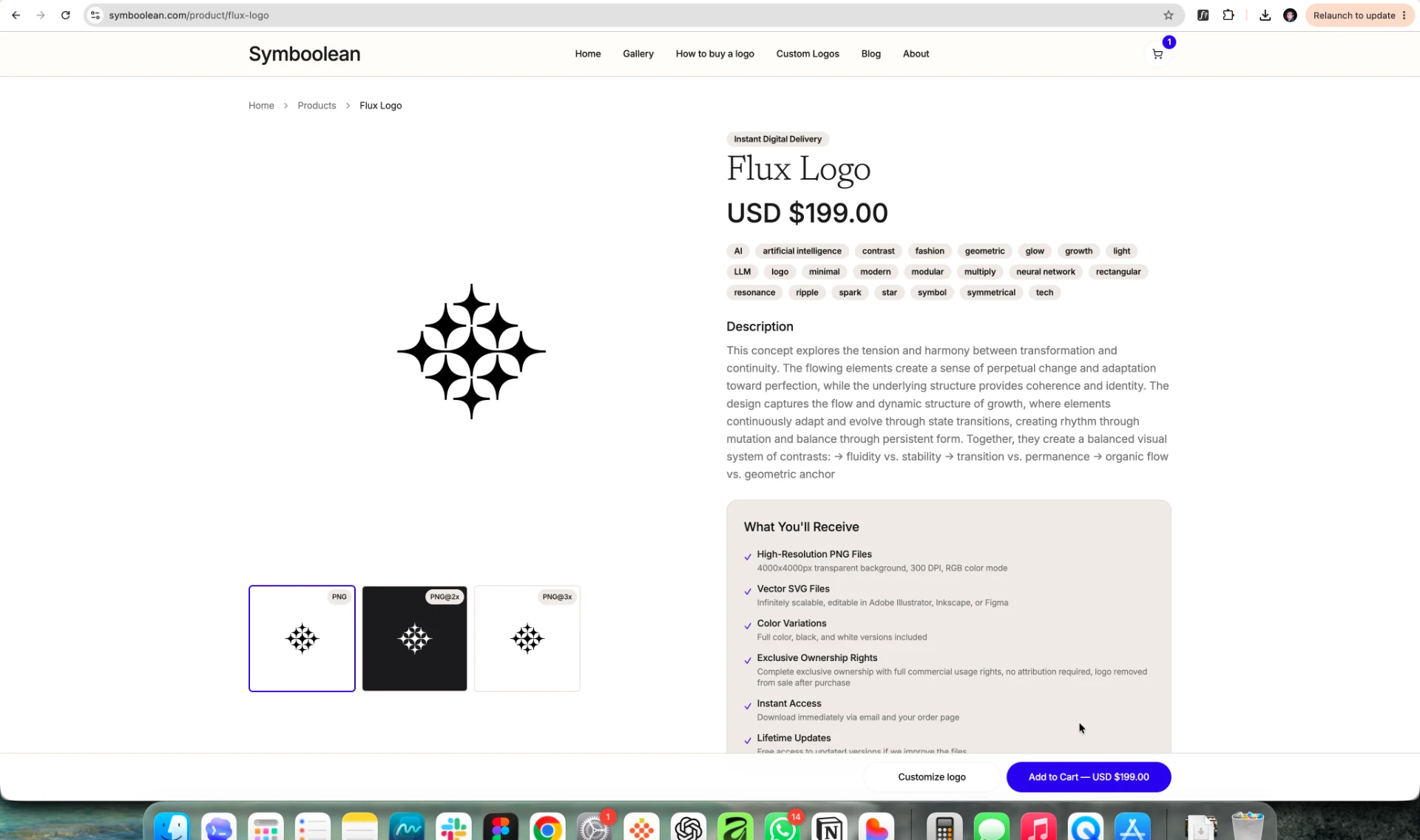
- InstantPurchase and download
- FullCommercial ownership transferred
The opportunity
AI has made it possible to build products in days instead of months. Thousands of new startups launch every week, but most face the same branding dilemma:
- AI-generated logos lack originality and strategic thinking
- Custom identity design is expensive and often takes weeks
- Existing marketplaces prioritise quantity over quality
Goals
Design a marketplace that delivers:
- Premium visual identities
- Immediate trust and credibility
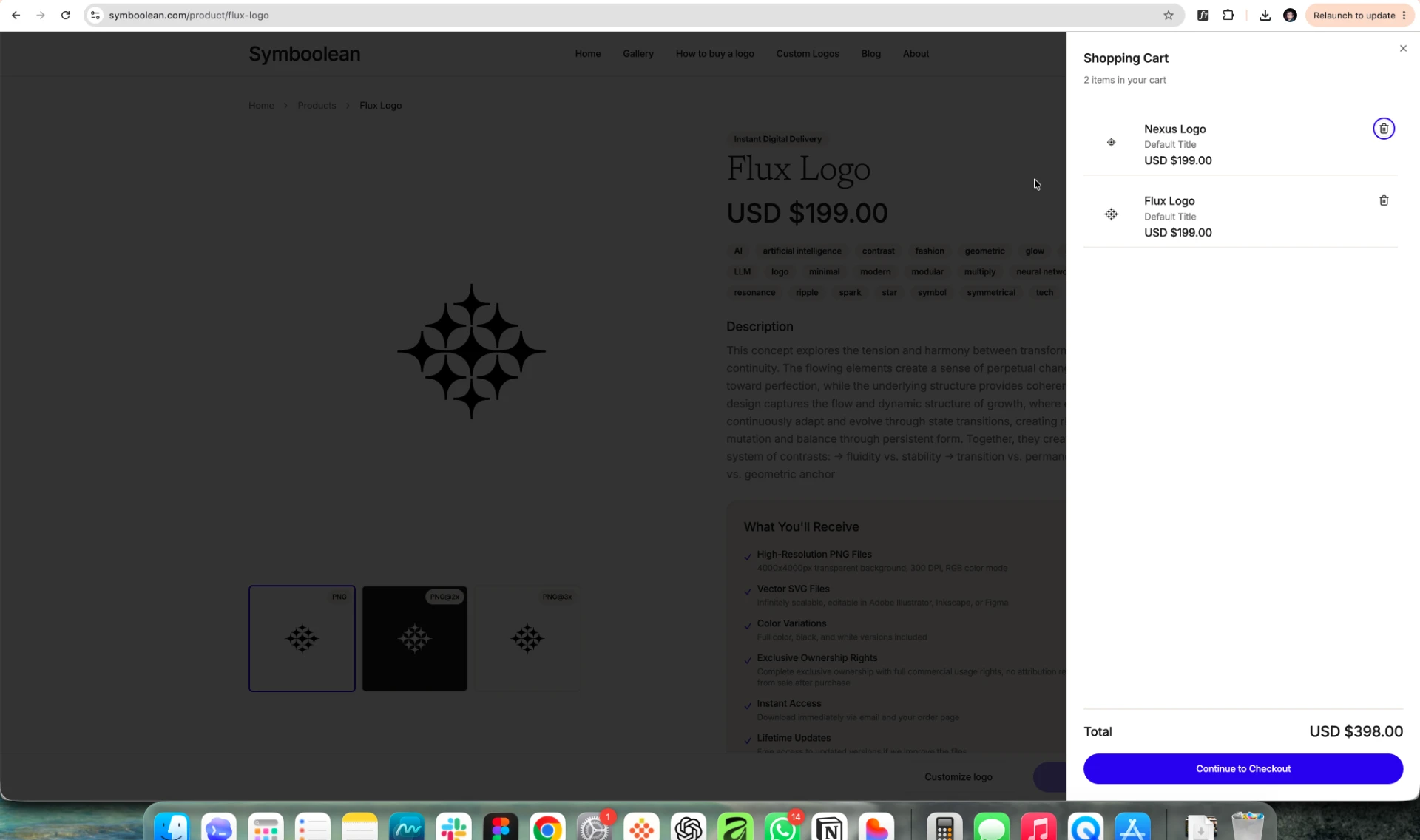
- Instant purchasing and download
- Full commercial ownership
- A carefully curated collection rather than an endless catalogue
Design principles
Every logo follows the same design philosophy. Rather than chasing trends, the objective is to create timeless marks that remain distinctive across digital and physical applications.
- Geometrically balanced construction
- Strong symbolic narrative
- Simple, scalable forms
- Original shape language
- Pixel-perfect execution
- Designed entirely by hand, never AI-generated
Design challenges
The primary challenge wasn't designing logos — it was communicating quality. Customers need to trust the craftsmanship before making a purchase, so every interaction from browsing to checkout had to reinforce the premium nature of the collection.
The interface was intentionally restrained, allowing the logos themselves to become the focus while supporting confident purchasing decisions through clarity, consistency and thoughtful presentation.
My approach
I designed Symboolean as both a product and a brand. The visual language is minimal, editorial and highly structured, emphasising typography, whitespace and careful composition over decorative UI.
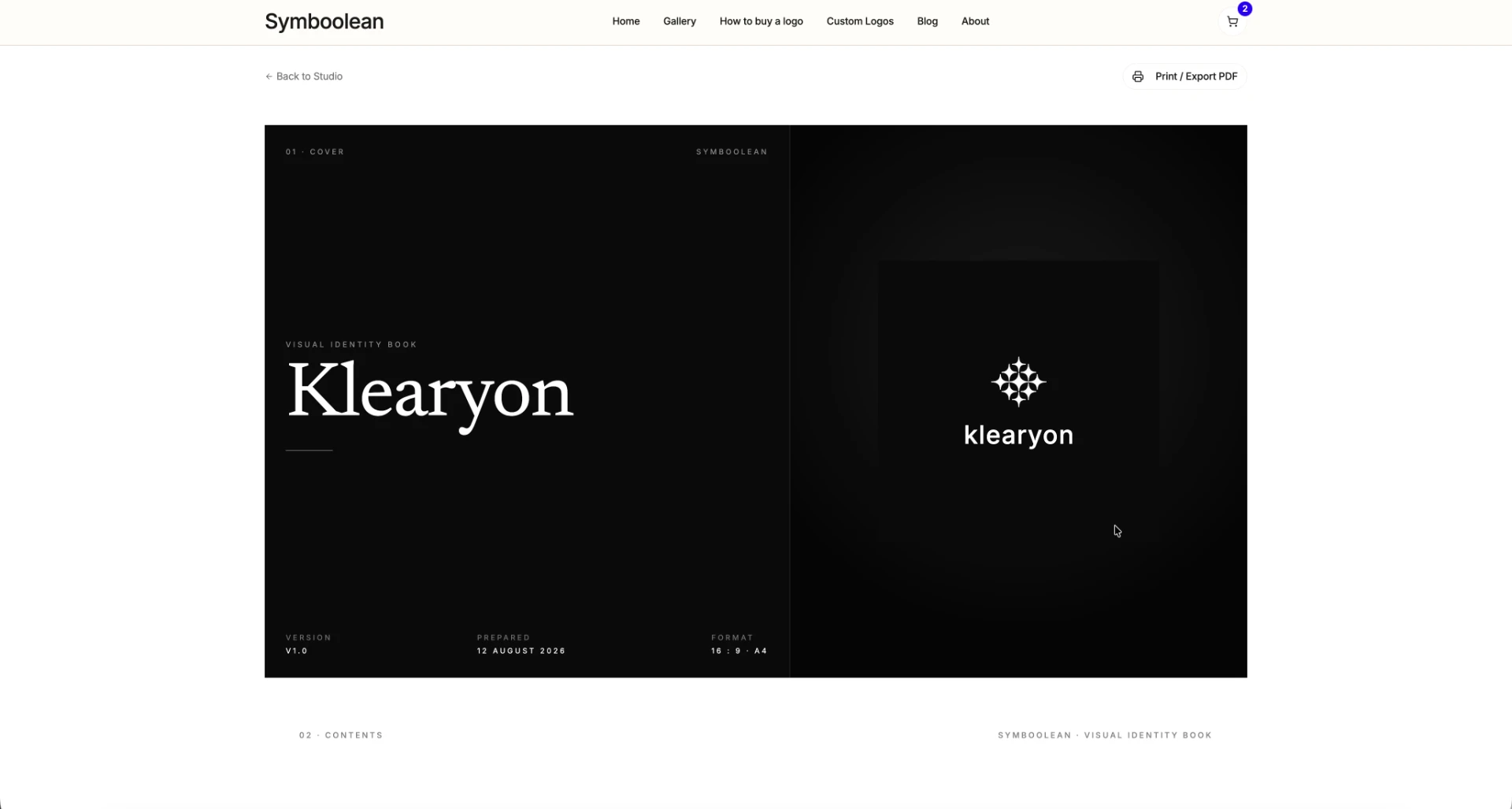
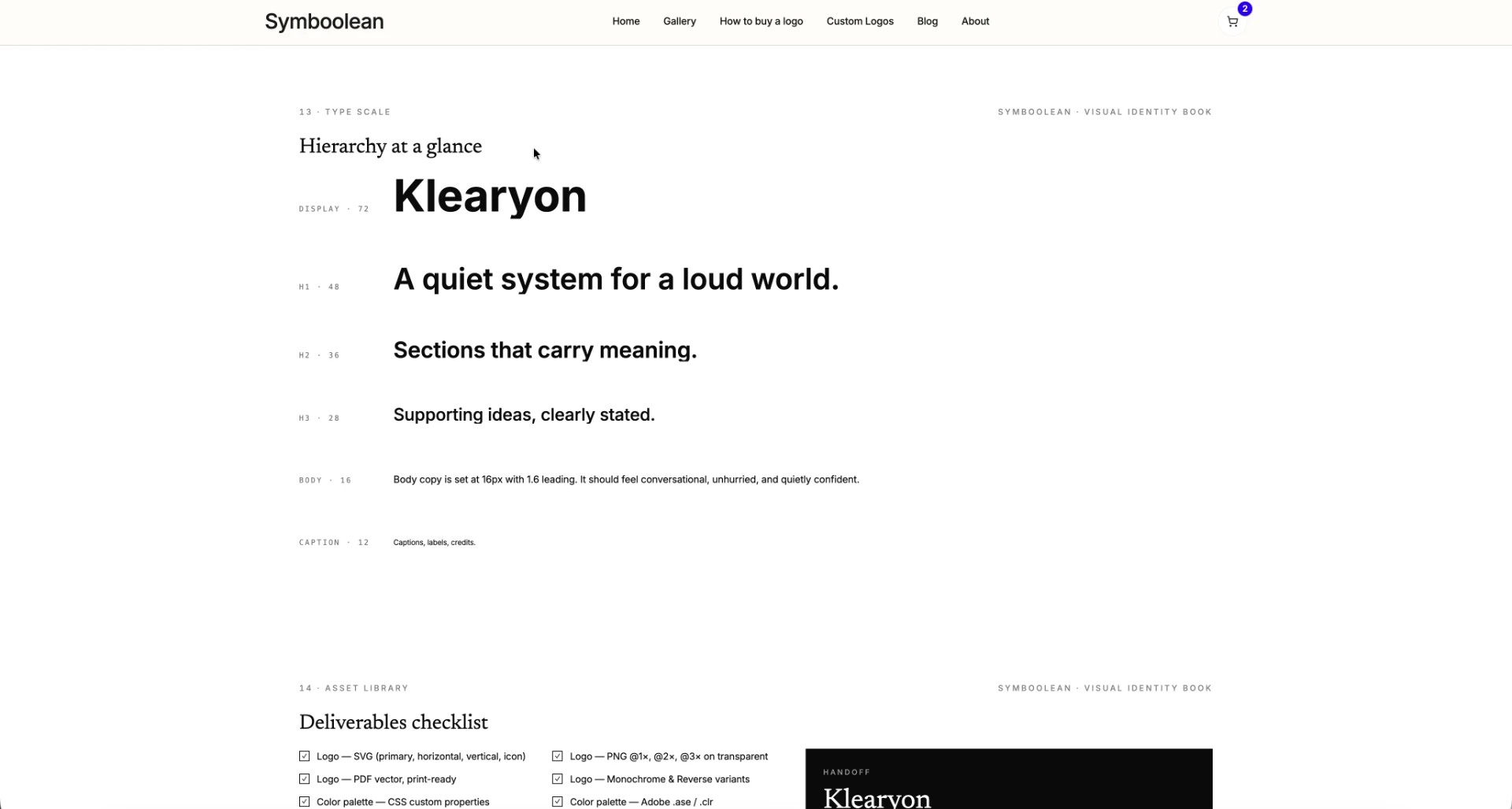
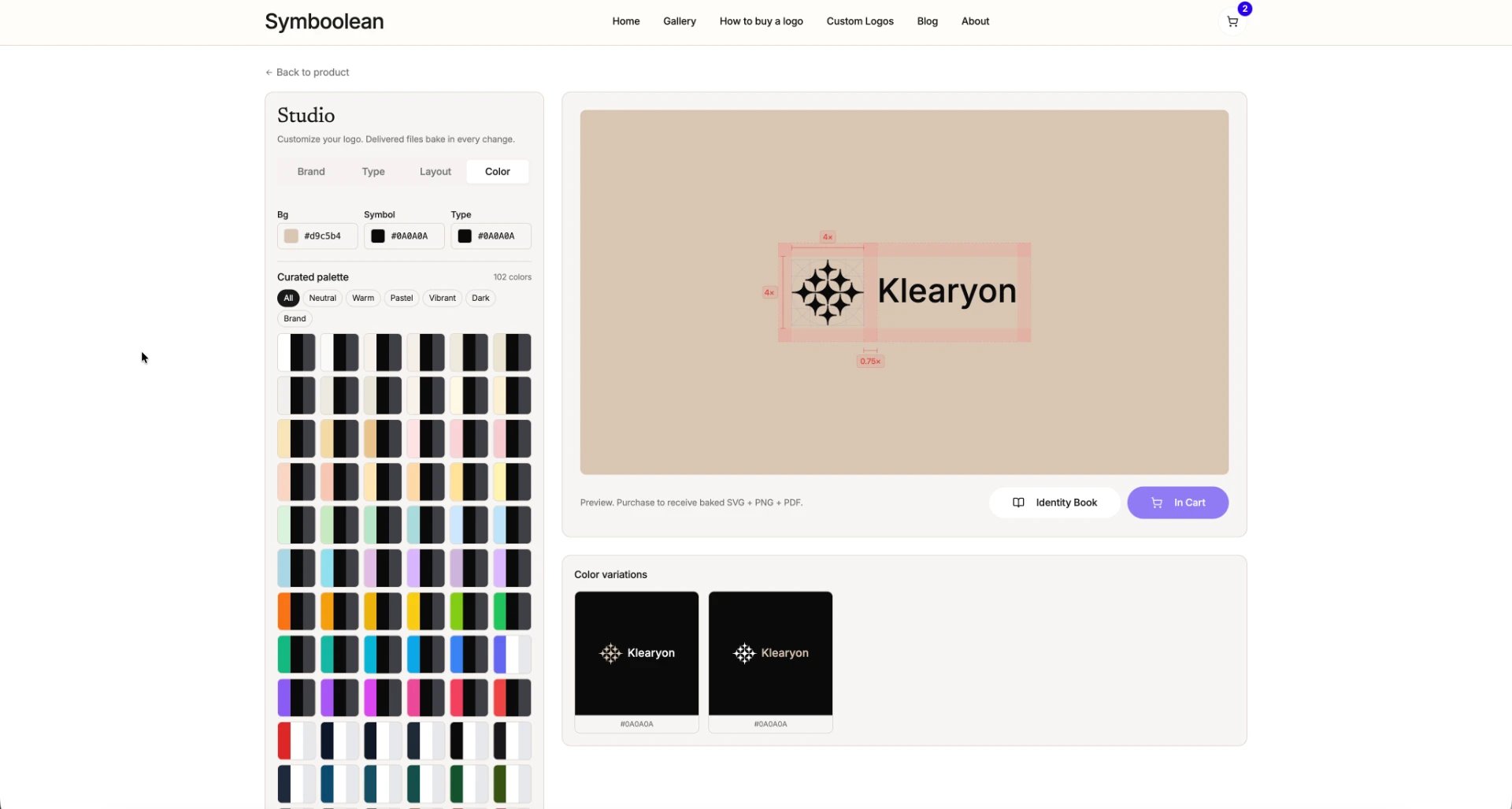
Alongside the storefront, I developed a scalable identity system capable of supporting future collections, filtering, licensing, educational content and brand resources. AI-assisted development accelerated implementation and iteration while preserving complete creative control over the product experience and the logo designs themselves.
Outcome
Symboolean demonstrates how strong branding extends beyond designing a logo — it includes product positioning, customer trust, purchasing experience and presentation.
The result is a premium digital product that helps technology companies establish a distinctive visual identity in minutes rather than weeks.
What I learned
As AI continues to commoditise execution, originality, strategic thinking and craftsmanship become increasingly valuable.
Symboolean reinforced my belief that the role of design is not simply to produce visuals, but to create meaningful differentiation. In a market flooded with automated solutions, thoughtful design becomes one of the strongest competitive advantages a brand can have.