- Role
- Founder · Game Design · Systems Design · Brand Identity · Art Direction · Digital Companion Experience
- Timeline
- 2026 — present · Live
- Links
- Open live product
Overview
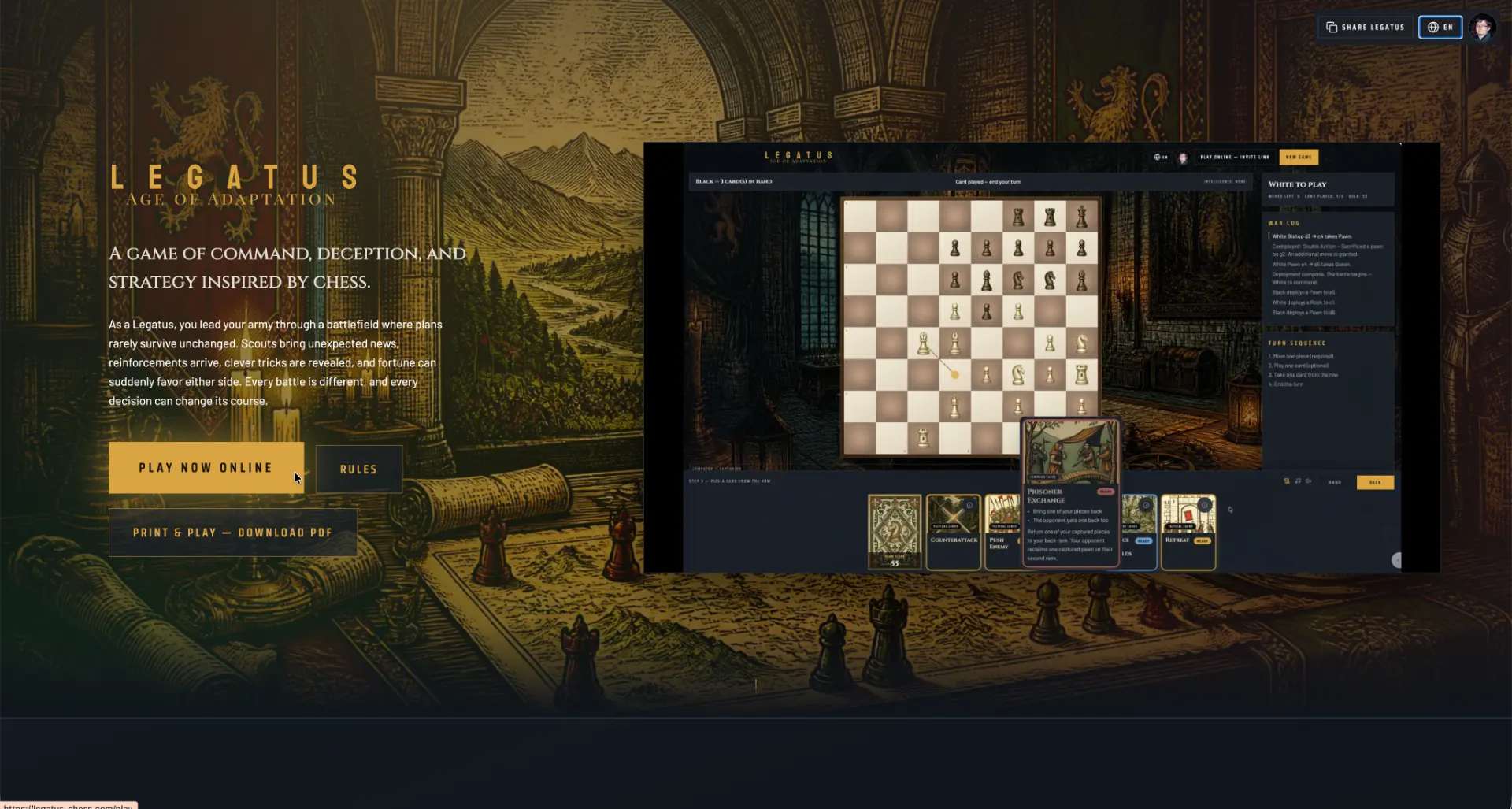
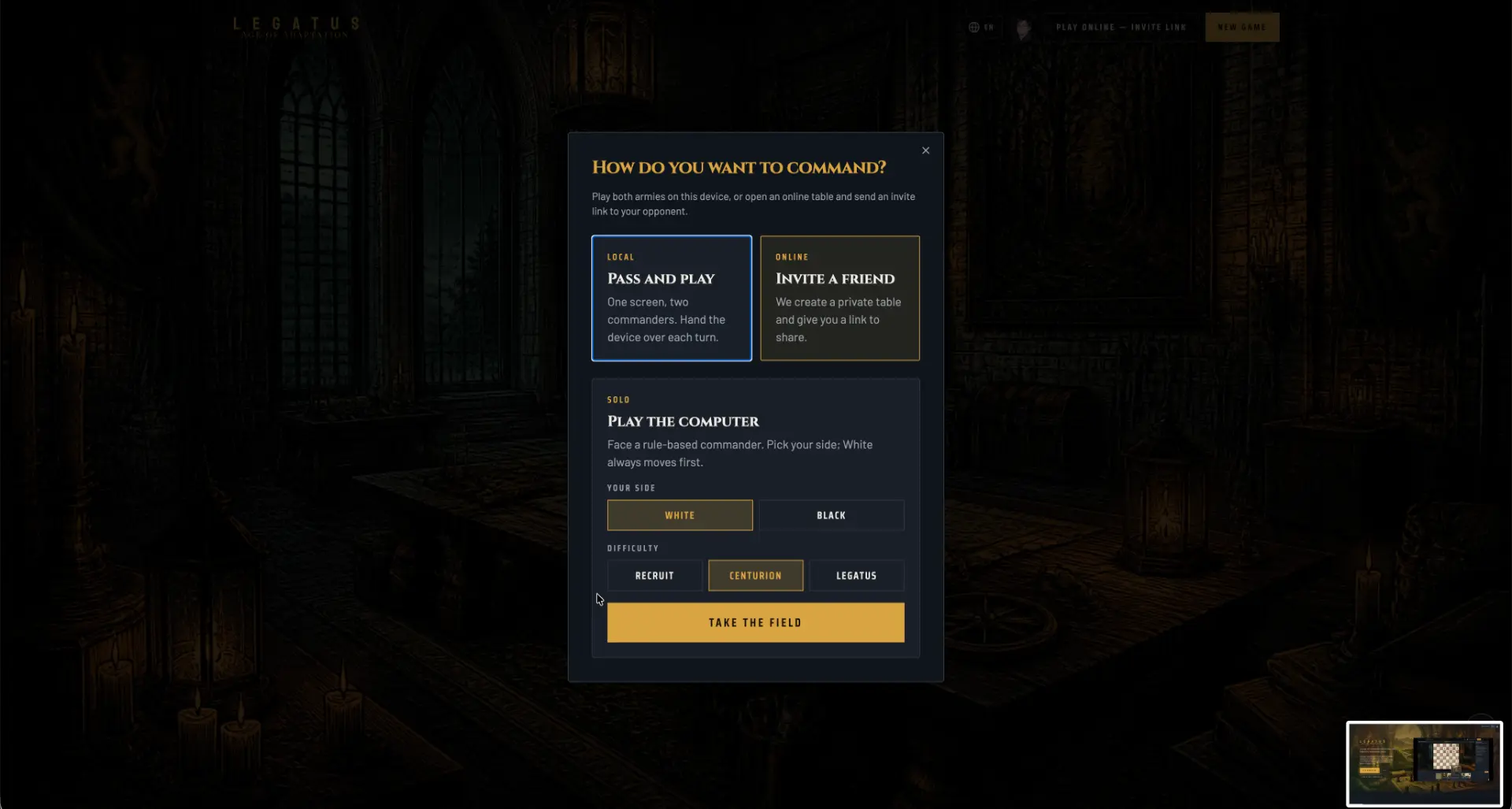
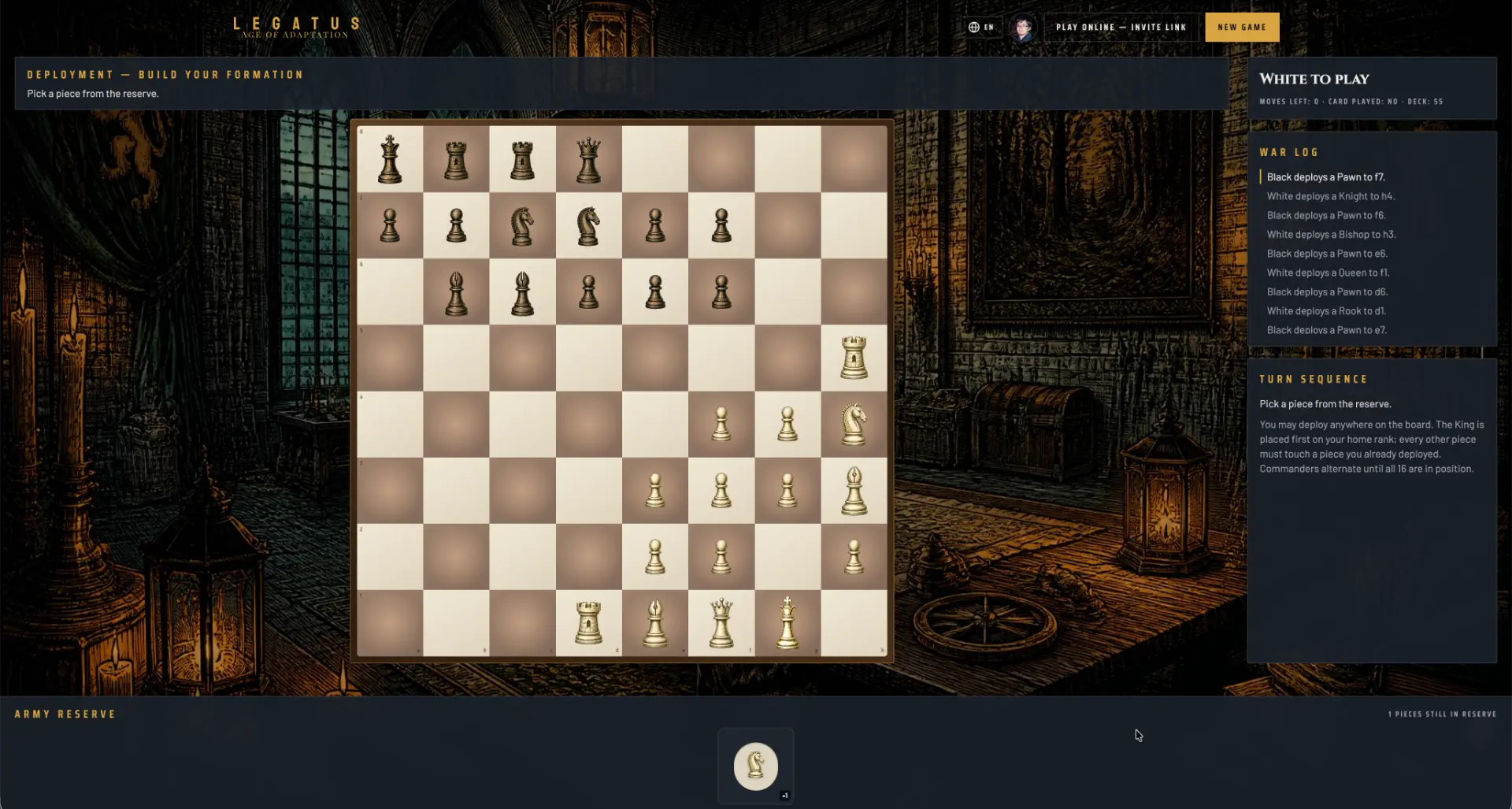
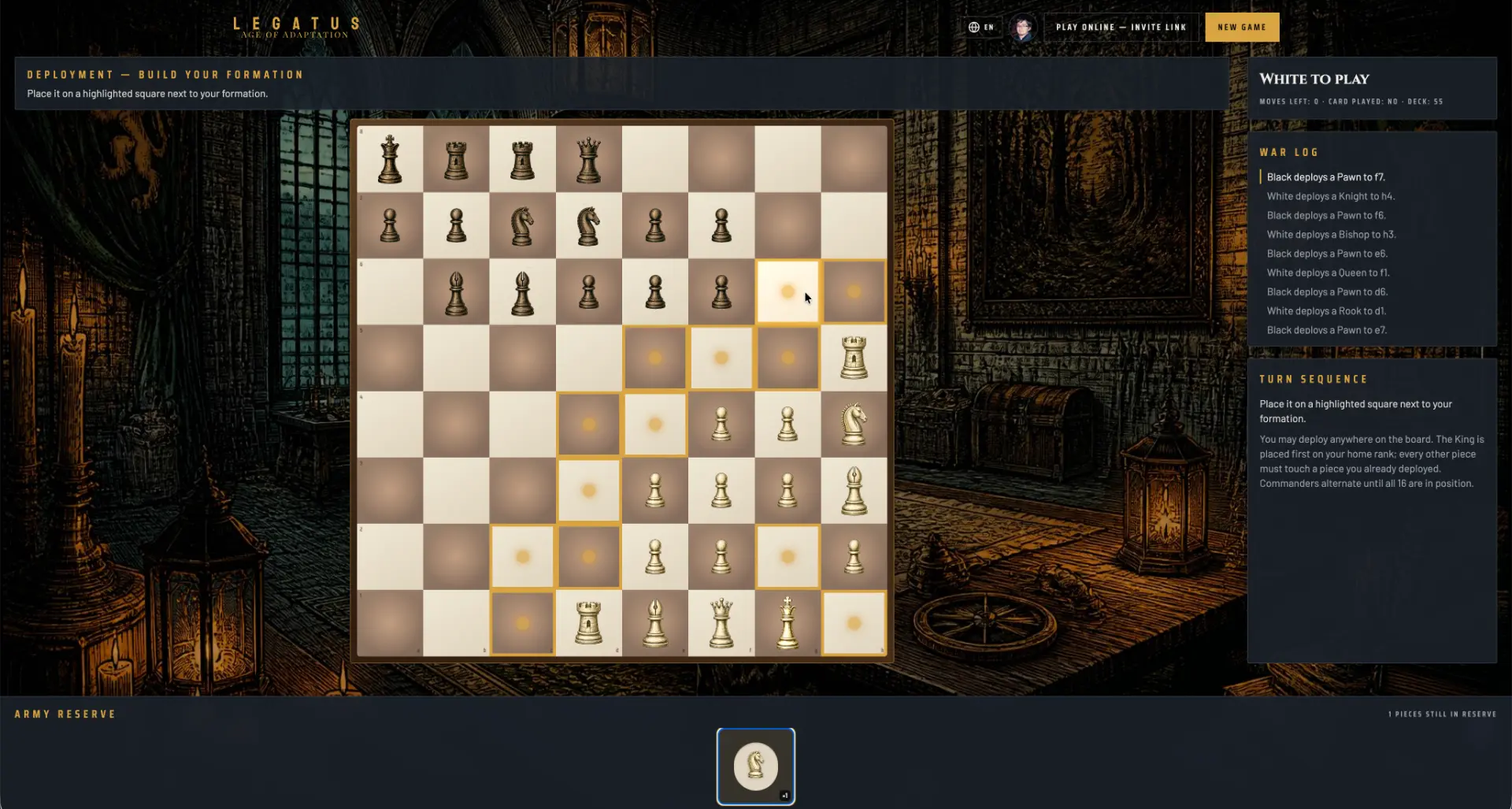
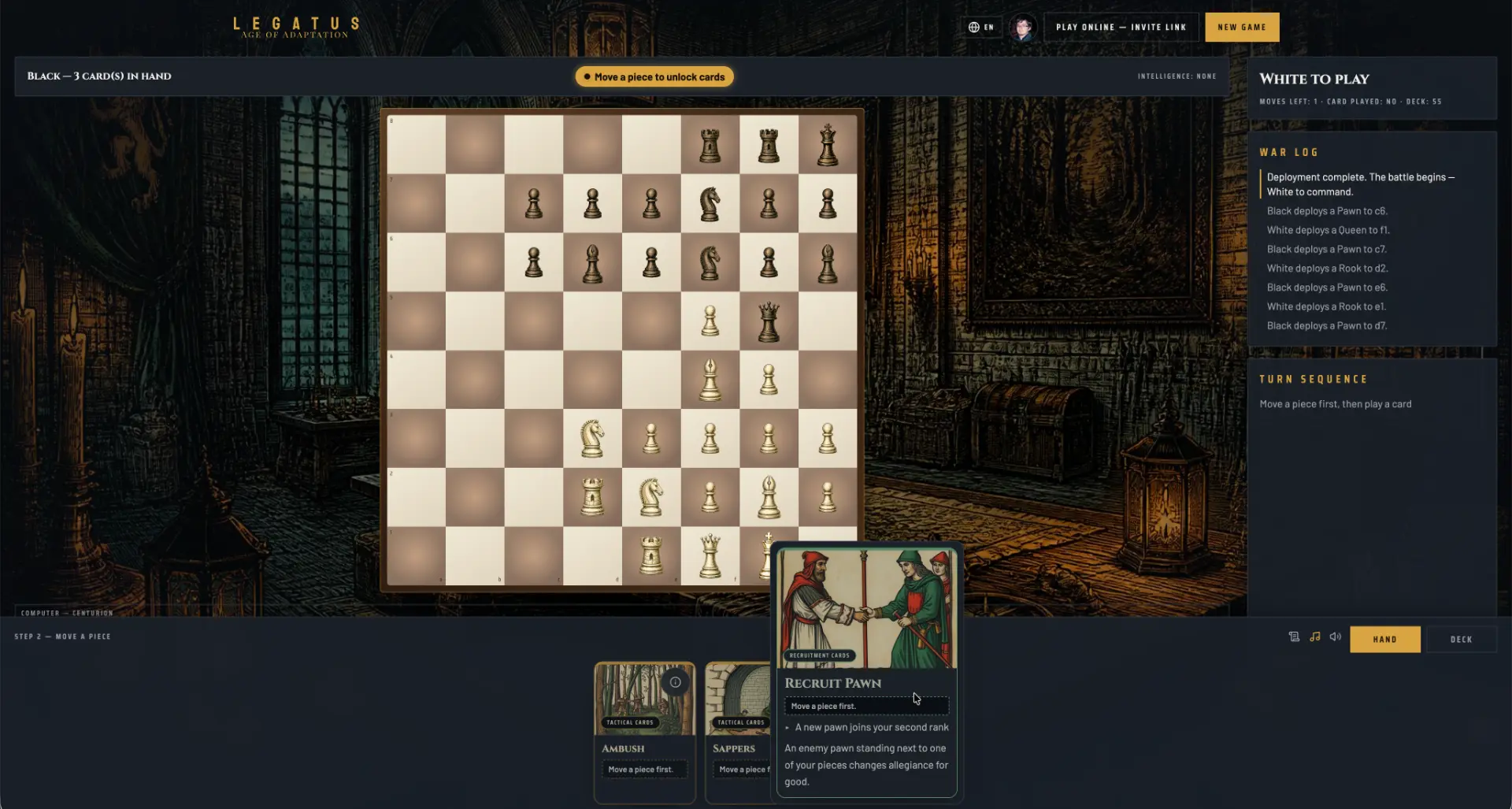
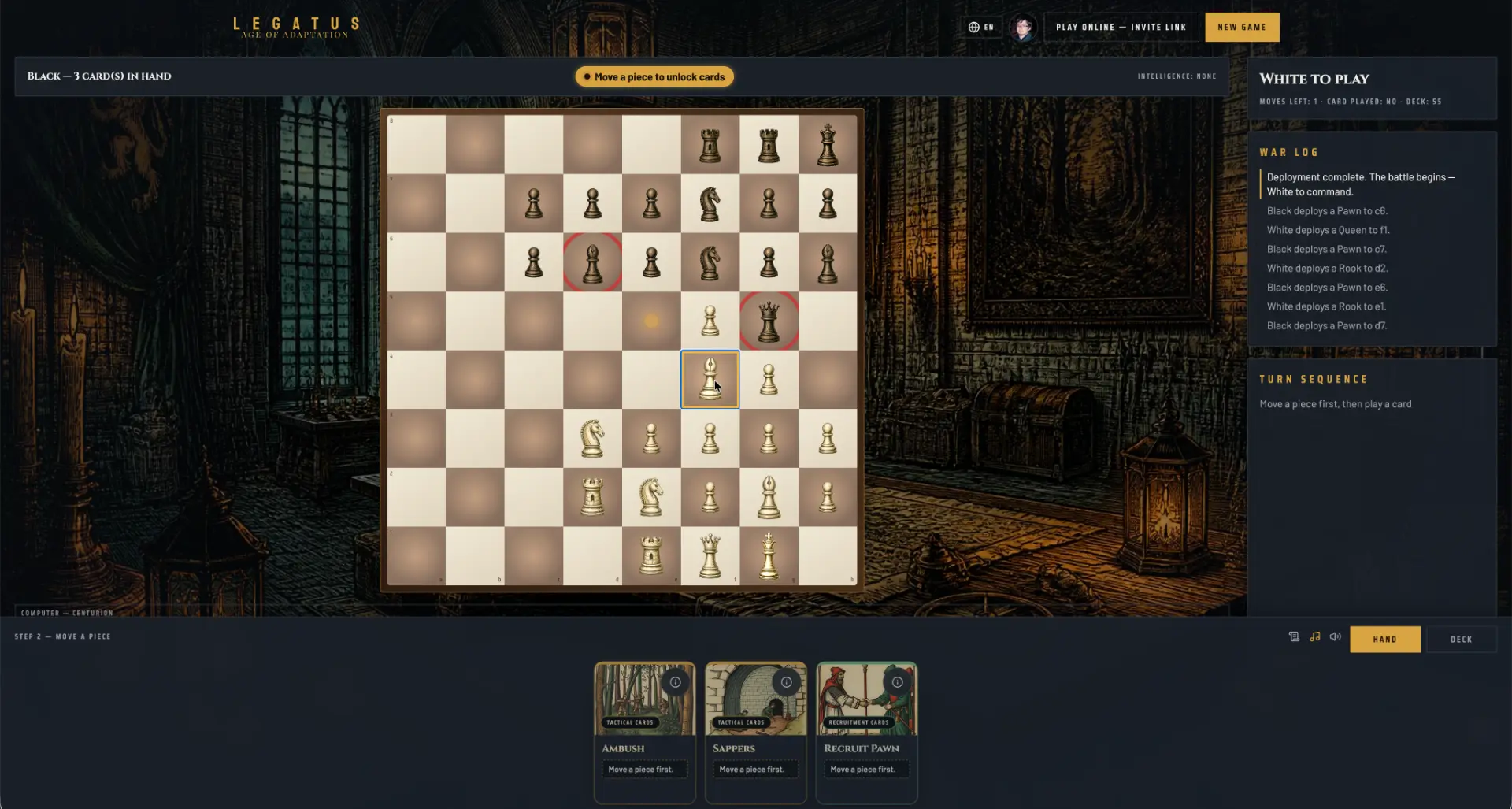
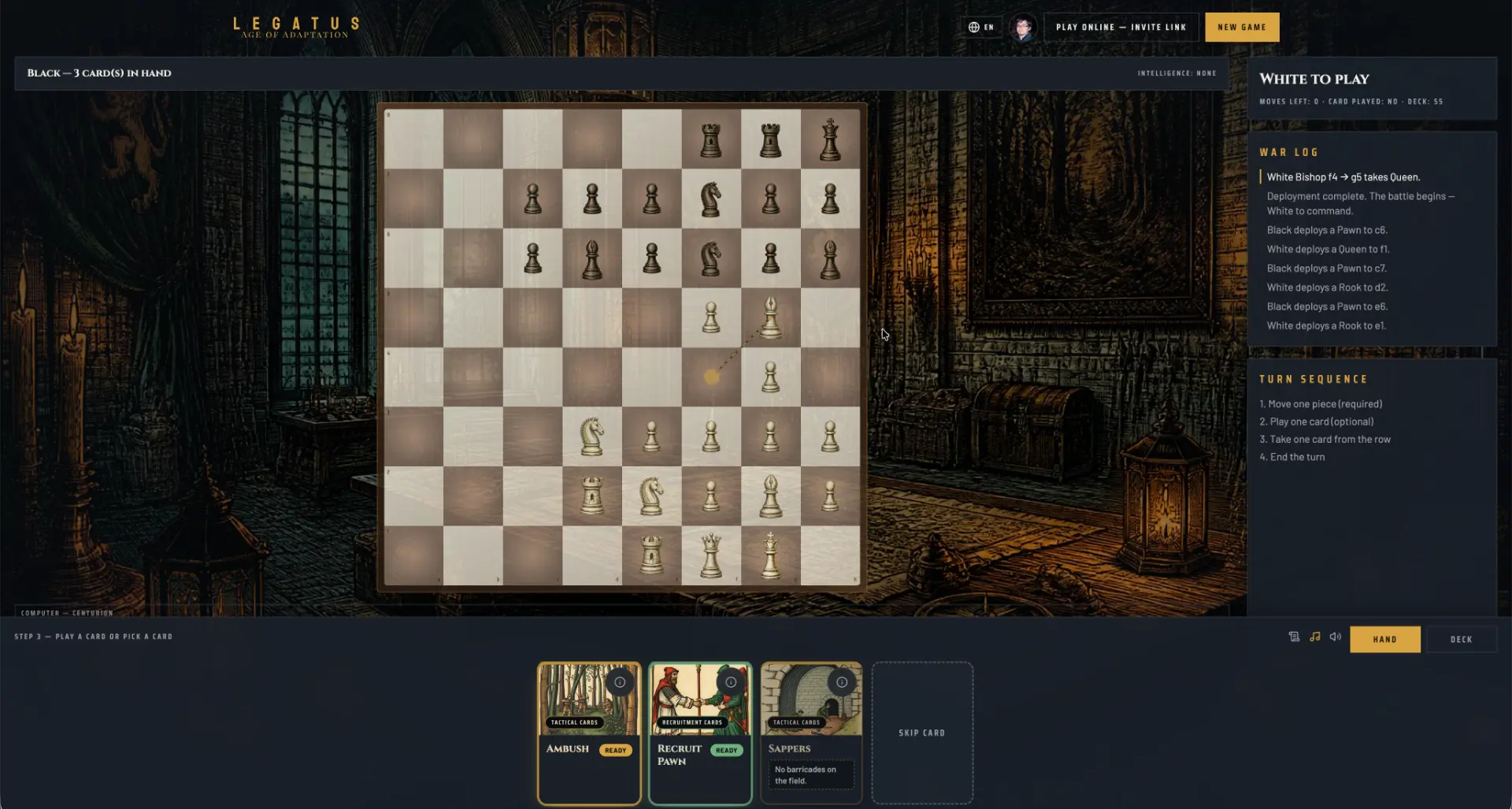
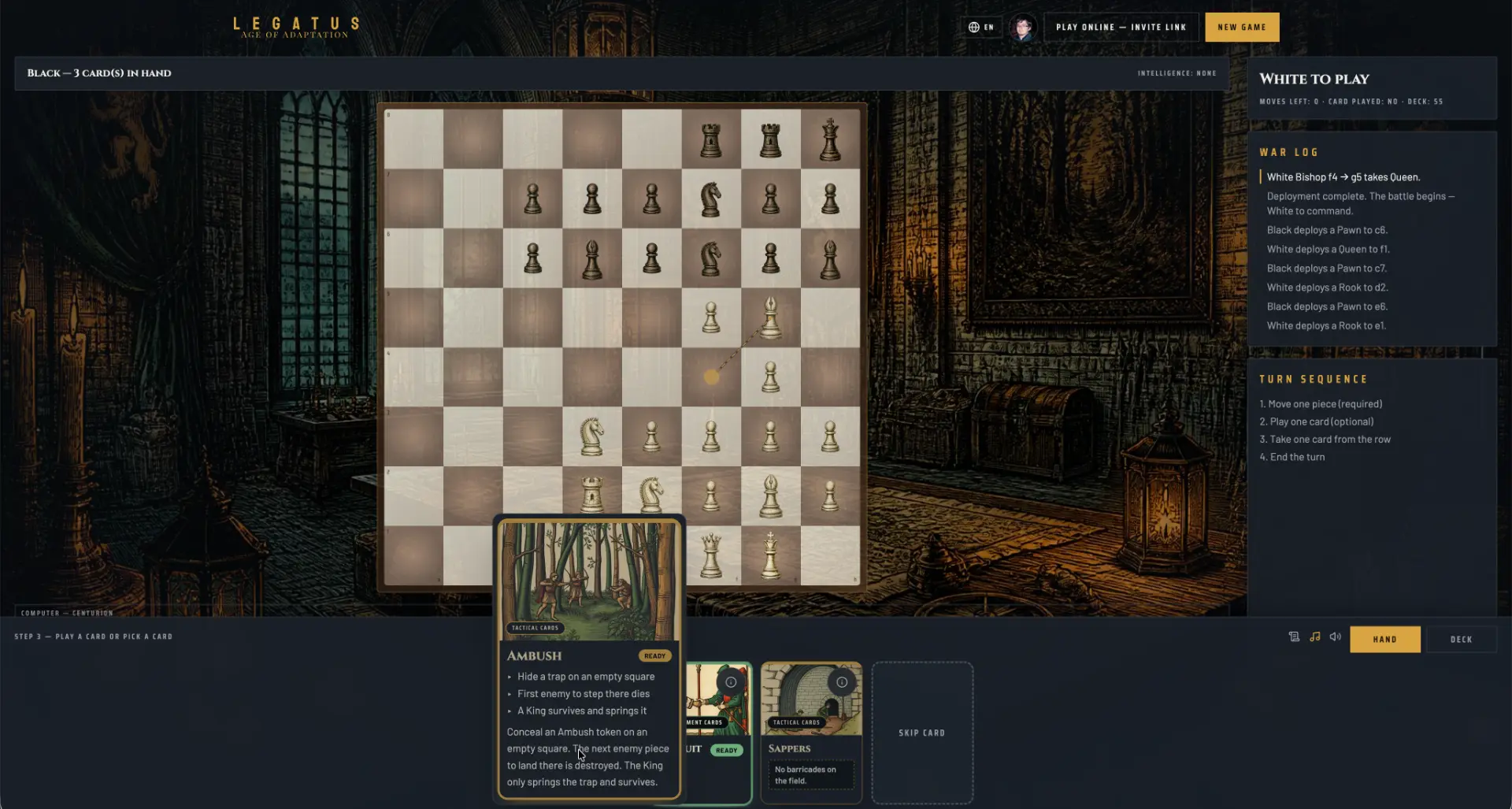
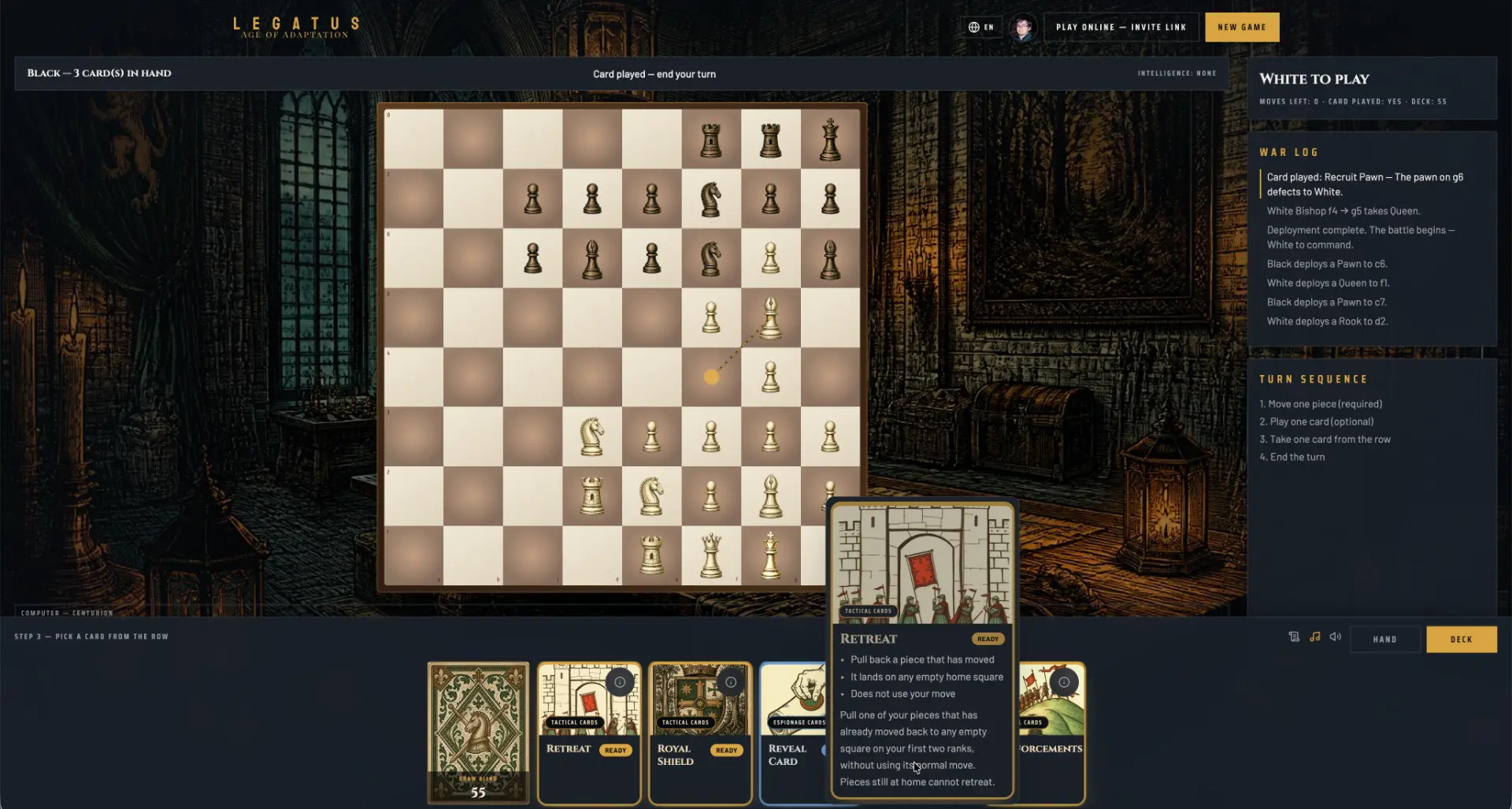
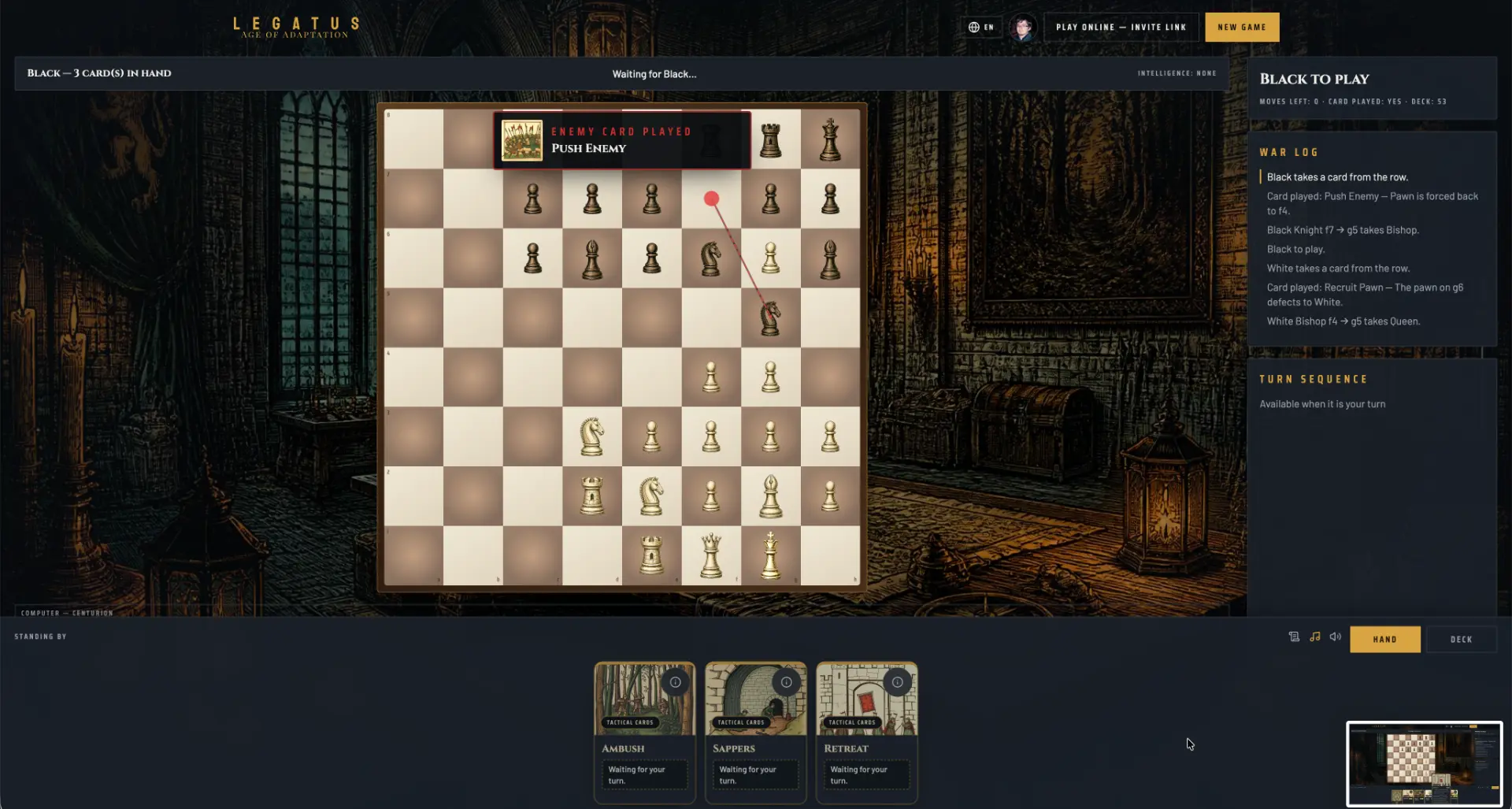
Legatus is a strategy board game inspired by chess. Instead of replacing chess, it extends it with command cards, battlefield events and strategic adaptation while preserving the core movement and tactical depth that makes chess timeless. I designed the game mechanics, branding, visual identity, rule system, prototypes and digital companion experience.
- 1Complete rule ecosystem
- 1Full brand and identity system
- ∞A different story every game
The problem
Chess is one of the greatest strategy games ever created, but every match begins with perfect information. Real conflicts rarely do.
I wanted to explore what happens when uncertainty, intelligence gathering, logistics and battlefield events become part of the strategic experience.
Goals
Create a game that:
- Respects classical chess
- Introduces meaningful uncertainty
- Rewards adaptation rather than memorisation
- Remains easy to learn
- Creates a different story every game
Design challenges
Balancing new mechanics with an already perfect game proved to be the biggest challenge. Every additional rule risked making the experience more complicated without making it more interesting.
The design process became one of subtraction rather than addition. Every mechanic had to justify its existence.
Every mechanic had to justify its existence.
My approach
I iterated through multiple versions of:
- Command card systems
- Deployment mechanics
- Battlefield events
- Board setup
- Game pacing
Prototyping and identity
Prototypes were continuously refined through playtesting, focusing on preserving strategic depth while reducing unnecessary complexity.
Branding and visual identity were developed alongside the mechanics to create a premium tabletop experience inspired by medieval military command.
Outcome
Legatus evolved into a distinct strategy game that combines deterministic planning with unpredictable battlefield events.
The project demonstrates systems thinking, balancing, iterative design and the ability to design complex rule ecosystems while maintaining usability.
What I learned
Game design is one of the purest forms of systems design. Every rule changes every other rule.
Designing Legatus strengthened my understanding of trade-offs, feedback loops, player psychology and emergent behaviour — skills that directly translate to designing complex digital products.